What Types of Braces Does Dr.Yue Offer at Willowbrook Orthodontics?
At Willowbrook Orthodontics, I offer four treatment options: traditional metal braces, clear ceramic braces, Invisalign clear aligners, and self-ligating braces. Each has real strengths and real trade-offs, and the right choice depends on your bite, your daily life, and your goals. As a board-certified orthodontist and Invisalign Premier Provider, my job is to walk you through the differences so you can choose with confidence.
Why Treatment Options Matter
Orthodontic treatment is not one-size-fits-all. In my Willowbrook practice, I see teens who want the most discreet option for school, professionals from Hinsdale and Burr Ridge who present in court or on video calls every day, and parents who want the most efficient path for their child. Every one of those needs points to a different appliance.
The American Association of Orthodontists reports that around 4 million people in the U.S. are in orthodontic treatment at any given time, and roughly one in four is an adult (AAO, 2024). That’s why I keep multiple treatment options on the table. Your appliance should match your life, not the other way around.
Traditional Metal Braces
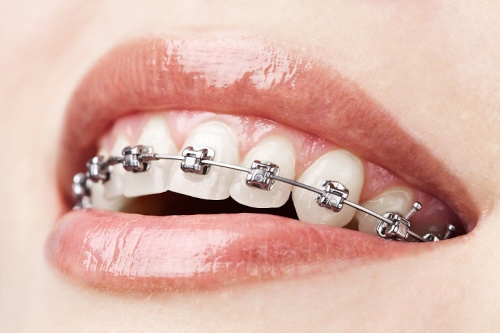
Traditional metal braces are the most reliable and versatile option I offer. They handle every type of case, from mild crowding to complex jaw discrepancies, and they typically deliver predictable results in 18 to 24 months for teen patients.
Modern metal braces are not what they were twenty years ago. The brackets are smaller, smoother, and lower profile. Teens also love that they can pick colored elastics at every visit, which turns the appliance into something personal. For families looking for the most cost-effective and dependable route, metal braces are still the gold standard.
Best for:
- Complex bite issues
- Severe crowding or spacing
- Patients who want a proven, durable option
- Younger teens who don’t mind the visible look
Clear Ceramic Braces
Clear ceramic braces work the same way metal braces do, but the brackets are made from a tooth-colored ceramic material that blends in with your enamel. From a few feet away, they’re often barely noticeable.
I recommend ceramic braces frequently for adult patients and image-conscious teens who want the precision of fixed braces with a quieter look. They’re a strong middle ground between metal braces and Invisalign. They cost slightly more than metal, and the brackets can stain if you’re heavy on coffee, red wine, or curry, so I coach patients on what to watch for.
Best for:
- Adults who want a discreet fixed appliance
- Teens who care about photos and social settings
- Complex cases that aren’t ideal for aligners
Invisalign Clear Aligners
Invisalign uses a series of clear, removable trays to move teeth gradually into position. As an Invisalign Premier Provider, I’ve treated hundreds of cases in Willowbrook with this system, ranging from minor crowding to more involved bite correction.
The advantage is obvious: the aligners are nearly invisible and removable, which means no dietary restrictions and easier brushing and flossing. The trade-off is compliance. Aligners only work when they’re in your mouth, and I tell patients they need to commit to 22 hours of wear per day to hit their projected timeline. Adults and motivated teens tend to do extremely well with Invisalign. Younger kids or anyone who’d rather “set it and forget it” is often better suited to braces.
Best for:
- Adults in professional settings
- Patients who want a removable option
- Mild to moderate cases where compliance is strong
Self-Ligating Braces
Self-ligating braces use a built-in clip on each bracket instead of elastic ties to hold the wire in place. The result is less friction during tooth movement and, for many patients, fewer adjustment visits over the course of treatment.
I offer self-ligating braces in both metal and ceramic versions, so patients still have a visibility choice. They’re a great option for patients who want the efficiency of fixed braces with potentially fewer appointments, which matters for families coordinating school, sports, and work schedules across Willowbrook, Darien, and Westmont.
Best for:
- Patients who want fewer or shorter adjustment visits
- Cases where reduced friction supports faster movement
- Patients seeking a low-maintenance fixed appliance
How I Help You Choose
Choosing between four good options can feel overwhelming, so here’s how I approach it in a consultation. First, I assess the bite. Some cases narrow the options before we ever talk preferences. Then I ask about your lifestyle: your job, your sports, your social commitments, your daily routine. Finally, we talk budget and timeline.
By the end of a 45-minute consultation, you’ll have a clear recommendation, the alternatives that would also work, and the trade-offs of each. No pressure, no upsell. Just a plan built around you.
What to Do Next
If you’ve been weighing your options, the most useful thing you can do is come in for a consultation. I’ll review your records, examine your bite, and walk you through which appliances would work for your case and which I’d actually recommend. You’ll get a real treatment estimate and a real timeline before you ever commit to anything.
Willowbrook Orthodontics serves families across Willowbrook, Burr Ridge, Darien, Westmont, and Hinsdale. I’d love to meet you and help you find the option that fits your life.
A Note from Dr. Yue
I’ve spent more than a decade helping patients in the Chicago area find the right orthodontic option, and I’ve learned that the best appliance is the one you’ll actually wear and care for. My team and I are here to make that easy. Whether you choose metal, ceramic, Invisalign, or self-ligating, you’ll get the same precision and the same personal attention from start to finish.